
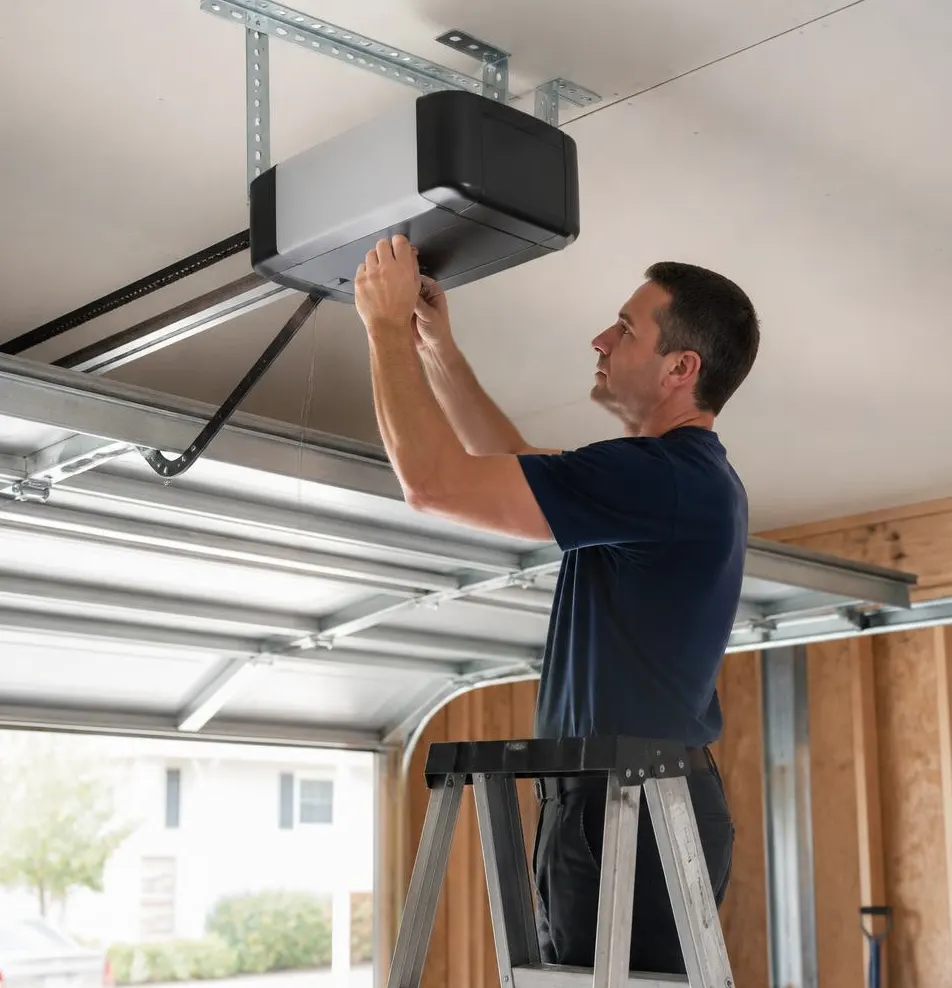
The Mistake That Starts Every Argument
Here's the mistake almost everyone makes: during the move-in walkthrough, someone hits the wall button, watches the door go up and down once, and calls it good. It's tempting because it's fast, it looks thorough, and the door did, in fact, open and close. But a door can cycle perfectly fine on the day you look at it and still have a worn spring, a sensor that's barely within tolerance, or an opener force setting cranked too high — all things that won't show up until three months later, in the middle of winter, when someone's trying to figure out whose problem it is.
The Quick Walkthrough Test Tells You Almost Nothing
A single open-close cycle only confirms the door moves. It doesn't tell you if the door is balanced, if the cables are fraying, if the weatherstripping has already hardened and cracked from a few winters of freeze-thaw cycles, or if the safety sensors actually stop the door when something blocks the path. Those are the things that turn into disputes later, because by the time they fail, nobody remembers what condition they were in at move-in.
Who Usually Covers What
Leases vary, and this isn't legal advice — check the actual lease language. But in most rental arrangements, the general split works like this:
Typically the Landlord's Responsibility
- Structural issues: a door that's off its tracks, panels damaged by age or weather, a frame that's rotting or rusting
- Mechanical failure from normal aging: a spring that snaps after years of use, a worn-out opener motor, rollers that have simply reached the end of their life
- Safety components: sensors, auto-reverse function, anything tied to the door not injuring someone
- Weatherproofing that's failed due to age: brittle seals, gaps letting in drafts or water
Typically the Tenant's Responsibility
- Damage from misuse: backing a car into the door, forcing it closed when it's obviously stuck, jamming something in the track
- Batteries in remotes or keypads
- Reporting problems promptly — a tenant who notices a grinding noise in November and doesn't mention it until the door won't open in January has usually turned a cheap fix into an expensive one
- Basic upkeep like keeping the track area clear of stored items, salt bags, or bikes leaning against the door
The Move-In Checklist: Fifteen Minutes That Saves a Fight Later
Do this together, landlord and tenant, before anyone signs off on the condition of the unit. Write down what you find, date it, and both keep a copy.
- Balance test — disconnect the opener (pull the release cord) and lift the door halfway by hand. It should stay put. If it drops or flies up, the springs are already out of adjustment, and that's worth flagging before anyone's name is on the problem.
- Spring condition — look for visible gaps, rust, or stretching in the coils. Springs on older homes in this area often show their age faster because of repeated freeze-thaw cycles.
- Cables and pulleys — frayed strands or visible rust mean these are near the end of their service life.
- Rollers and tracks — listen for grinding during the cycle and check that the tracks are straight, not bowed or pulling away from the wall.
- Auto-reverse safety test — place a block of wood flat on the ground in the door's path and close it. The door should reverse on contact. If it doesn't, that's a safety issue, not a cosmetic one.
- Weatherstripping — check the bottom seal and side seals for cracking or gaps. On older housing stock with original doors, this is often the first thing to go, and it's an easy one to photograph as proof of pre-existing condition.
- Opener and remotes — confirm all remotes and keypads work, and ask when the opener's force settings were last adjusted. A door that slams down hard or struggles to lift usually has the force set wrong, not a tenant problem.
- General wear — dents, rust spots, water stains on the inside of the panels (a sign of past leaking), and any signs of previous patch repairs.
Normal Wear vs. Misuse: Where the Lines Blur
Most disputes come down to one question: did this fail because it's old, or because someone did something to it? A spring snapping after years of temperature swings is wear. A door that won't close because the track got bent when someone backed into it is misuse. The gray area is usually weather-related: ice buildup at the bottom seal, salt corrosion on hardware, or a door that's harder to lift in deep winter cold. None of that is anyone's fault — it's just what happens to garage doors through a Kiski Valley winter — but it should still get fixed promptly so it doesn't turn into a bigger mechanical failure.
The real protection, for both sides, is documentation. Photos from move-in, a note of any pre-existing issues, and a quick email any time something is reported. That paper trail is what settles the argument, not memory.
When to Call Apollo Garage Door
If the move-in inspection turns up a door that's out of balance, springs that look stretched or rusted, or an auto-reverse test that fails, don't wait for someone to get hurt or for a small issue to turn into a full replacement. We handle spring replacement and garage door opener service for rental properties and owner-occupied homes throughout Apollo, Vandergrift, Leechburg, and the rest of the Kiski Valley, and we'll give you a straight answer on whether something is a quick adjustment or a bigger repair. For landlords managing multiple units, a preventive maintenance visit before winter sets in can catch the small stuff — worn rollers, loose hardware, a sensor that's slightly misaligned — before a tenant is standing in the cold calling you at 7 a.m.
If you're sorting out a move-in inspection, a mid-lease repair question, or just want a second opinion before winter, call Apollo Garage Door. We serve homeowners and property owners across Apollo, PA and the surrounding 15613 area, and we'll tell you honestly what needs fixing and what can wait.